ServicesMain Water Line Replacement
Main Water Line Replacement in Gallatin
The buried pipe between the meter and your home carries every gallon you use. When it cracks, rusts shut or starts losing pressure, we track down the cause, show you the evidence and install new pipe sized correctly for your household.
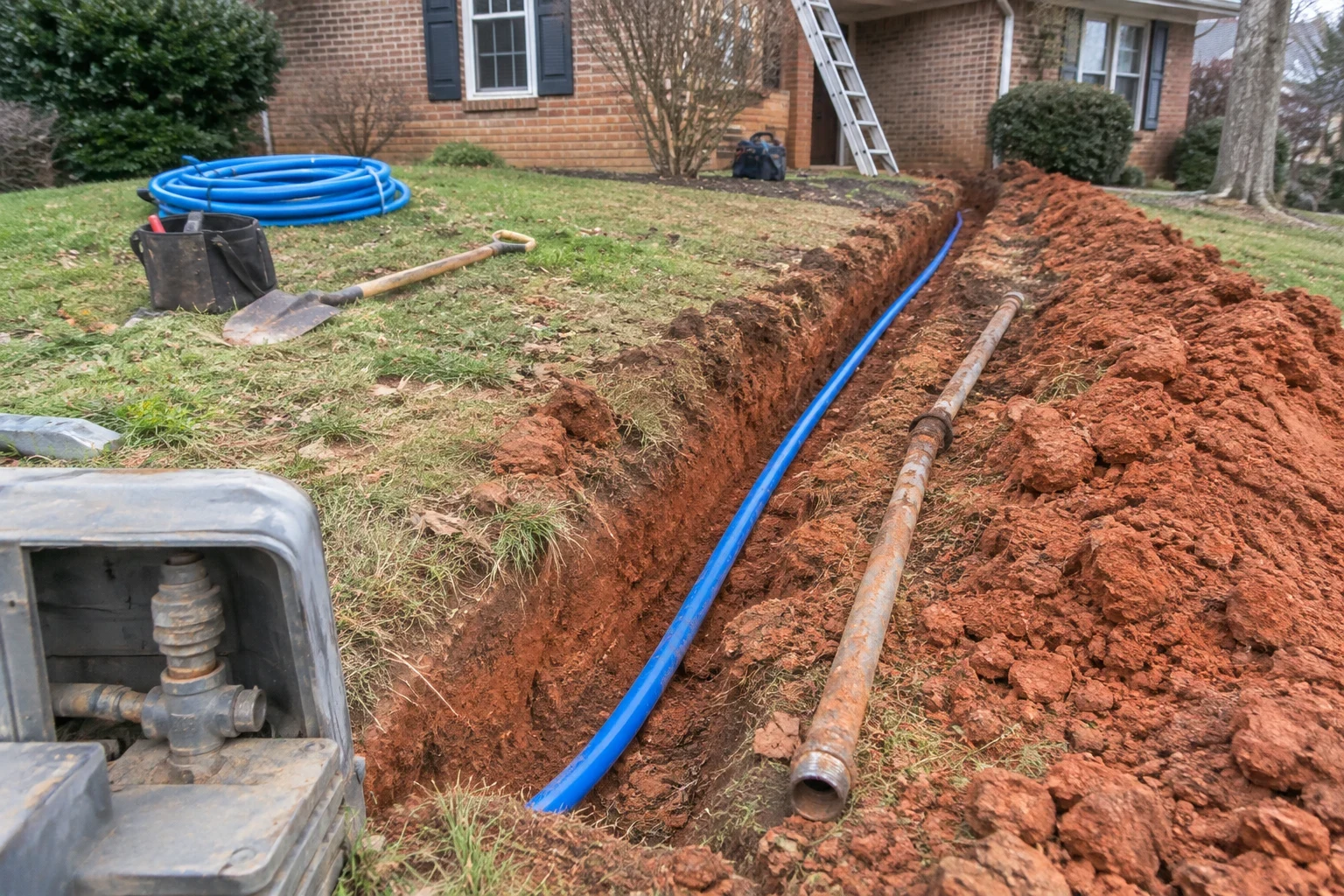
What the main water line is and when replacing it makes sense
The main water line, sometimes called the water service line, is the homeowner-owned pipe that runs from the utility meter by the street to where water comes into your home. It sits underground, below the frost line. In older homes it is often galvanized steel, which rusts on the inside until the bore narrows, or gray polybutylene installed from the late 1970s into the mid 1990s, which grows brittle and splits at the fittings.
A full replacement is the better choice once the material is wearing out along its length. A newer line with one isolated problem may call for a different answer, and we will be straight with you about which case applies. On a line that is corroded end to end, fixing one spot tends to push the next break a few feet farther across the yard.
The red clay common around Gallatin swells when wet and shrinks when dry, and that constant movement works old joints loose. A new line laid on proper bedding, using pipe that flexes, handles that ground far better than the rigid pipe it replaces.
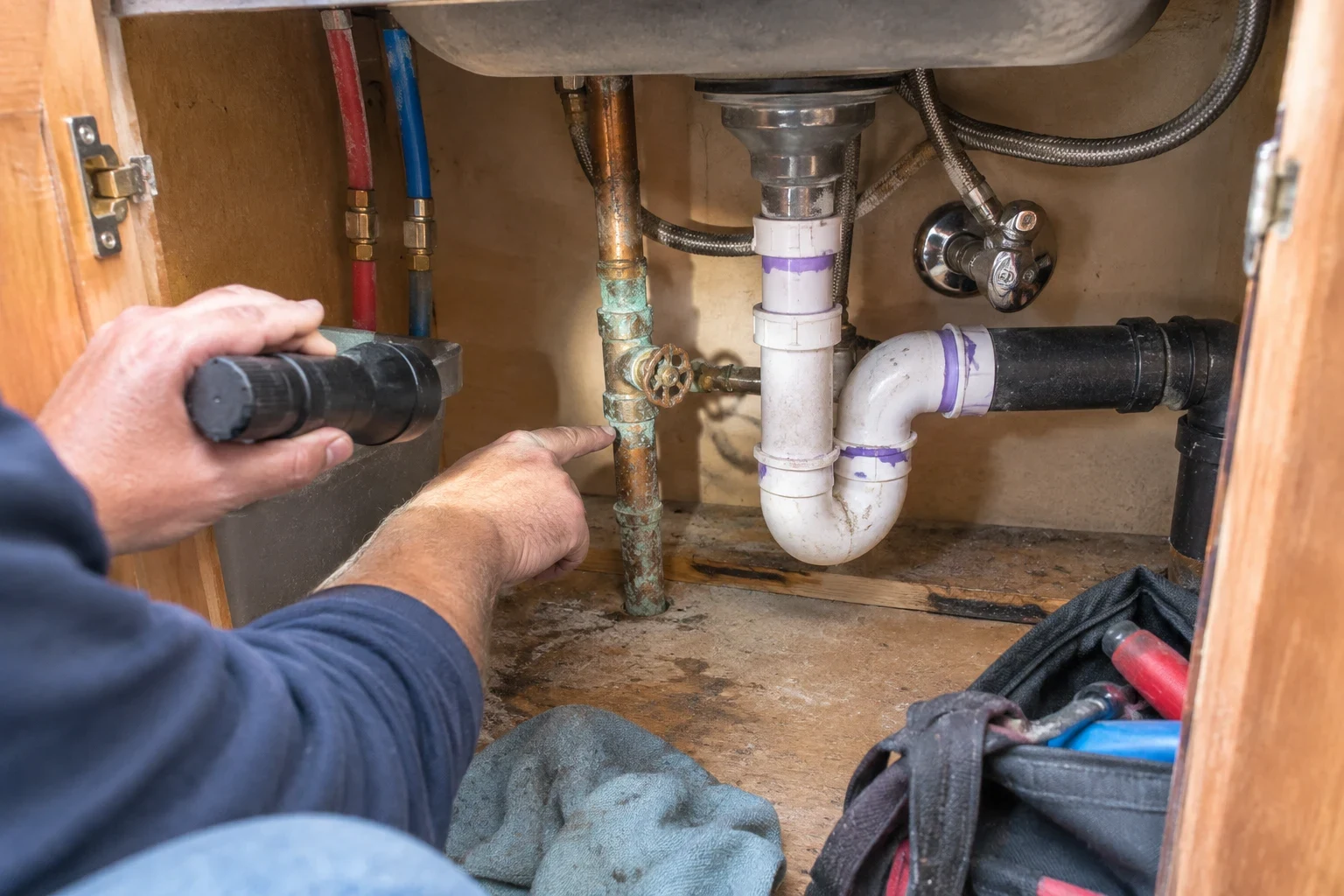
What comes with a main line replacement
- 01
Finding the line and the problem
We map the pipe route, locate the meter and the inside shutoff, and identify the pipe material. Utility locate marks are placed before we dig, so gas, power and cable lines stay out of harm's way.
- 02
Choosing trench or trenchless
Open trenching exposes the pipe along its whole path. Trenchless pulling works from a pit at each end and draws new pipe along the old route, leaving driveways, trees and beds in place. Rock, bends in the line and soil type decide which works for your yard, and we walk you through the tradeoff.
- 03
New pipe, sized right
Most jobs get PEX or HDPE polyethylene, which bends with shifting soil and will not rust. When copper makes sense, we bury type K, the thick-wall grade meant for underground use. Pipe diameter is matched to your fixtures so pressure holds, and we fit a new shutoff or pressure-reducing valve if one is needed.
- 04
Permit and inspection
Where the job requires a permit, we file for it. The trench stays open until the inspector has seen the connections, so nothing gets buried before it is checked.
- 05
Backfill and site cleanup
The new pipe sits in clean bedding material, and the soil goes back in compacted layers so it does not sink later. We rake the surface even and haul off the extra clay instead of leaving a pile by the walk.
Questions about Main Water Line Replacement?
Call(615) 551-1523Signs your main water line is failing
Low pressure at every fixture
When every tap and shower runs weak at once, the restriction is likely before water reaches your home. Rust buildup inside galvanized pipe is the most common reason.
A soggy or sinking strip of lawn
Grass that stays wet along a line during dry spells, or ground that keeps dropping, often follows the route of the buried pipe.
Higher water bills without more use
A bill that climbs while your routine has not changed can mean water is leaving the line underground. Shut off every faucet and appliance, then check the meter; a dial that keeps turning means the line should be checked.
Discolored or gritty water
Brown water that runs clear after a minute often comes from rusting steel pipe. Sand or grit in the water can signal a break that is pulling in soil.
Old pipe where the line enters
Gray plastic or threaded steel pipe at the shutoff means the material is close to the end of its service life, even if it has not failed yet.
How the work goes on the day
- 1
Inspection and written estimate
We look over the line, check your water pressure and walk the pipe route with you. The written estimate lists the method, the pipe type and any added work, so the price you see is the one you plan around.
- 2
Locates, permit and shutoff timing
After the utility marks are placed and the permit is approved, we let you know exactly when the water will be shut off. For most homes that is a few hours on one day.
- 3
Digging and laying new pipe
We open a pit at the meter and another at the house, then either trench between them or pull the new pipe through. Both ends get connected, and the old line is taken out of service.
- 4
Testing, inspection and backfill
The new line is put under pressure to confirm the joints hold, then flushed so no grit reaches your faucets. Once any required inspection is passed, we backfill, compact and tidy the work area.
What sets the price of a new water line
Most of the cost comes down to two things: how far the meter sits from your house and what is built or planted on top of that path. Before anyone digs, you get a free written estimate with each part of the job listed on its own line. We take cash or any major credit card, and if you would rather spread the cost out, ask us about financing.
- Distance and burial depth
- A long setback from the road means more feet of pipe and more ground to open. A line buried deeper takes extra time to expose and to backfill properly.
- Hardscape and trees along the route
- If the pipe runs beneath a driveway, walkway, patio or large tree, we either cut and restore the surface or pull new pipe underneath it trenchlessly. Which way we go shifts the labor a good deal.
- Rock and clay
- Hitting limestone ledge slows the dig and can call for rock-breaking equipment. Dense clay holds rainwater, so a wet week makes the trench slower and messier to work.
- Pipe type and added valves
- PEX and HDPE run cheaper than type K copper. Adding a pressure-reducing valve or a fresh shutoff brings extra parts and labor when your home calls for them.
- Permits and scheduling
- Fees for the permit and inspection differ from one jurisdiction to the next. A line that bursts after hours and needs an emergency visit costs more than a replacement we plan ahead.
Main water line questions
Is the water line mine or the utility's?
In most cases the utility owns the meter and the pipe feeding it from the water main. Your responsibility starts at the outlet of the meter, and the run from there to your house is the pipe we replace. If the trouble turns out to be on the utility's portion, we tell you so you can contact them directly.
Does the whole line have to go, or just the bad part?
That comes down to what the pipe is made of and how it has held up. A fairly new copper or plastic line with one damaged area may not need to be replaced end to end. Polybutylene or galvanized steel that has failed once tends to be weak along its full length, so we show you the evidence and lay out both choices.
How much of my yard gets dug up?
With open trenching, you will see a dug strip along the pipe route, which we fill, compact and rake smooth. The grass takes a season or so to knit back together. Trenchless pulling only needs a small pit at each end, which is worth asking about if a driveway or garden sits over the line.
How long is the water off?
On a planned replacement, the water is shut off for part of a single day while we tie in the new pipe at both ends. We give you the shutoff window in advance, so you can set aside drinking water and plan showers and laundry.
My line burst late at night. What should I do?
Close the main shutoff, either at the meter or where the pipe comes into your home, and then phone us. Our 24/7 emergency plumbing service covers nights and weekends. We get the water under control first, then go over whether the line needs replacing.
Find out what is going on with your water line
We will check the line, explain what it is made of and what condition it is in, and give you a free written estimate. If water is pouring into the yard right now, we answer around the clock.