ServicesTankless Water Heaters
Tankless Water Heater Installation in Gallatin
A tankless heater only works as well as its sizing, gas supply and venting. We measure what your home actually draws, explain which unit fits and why, and install it with service valves so it can be flushed and kept running for years.
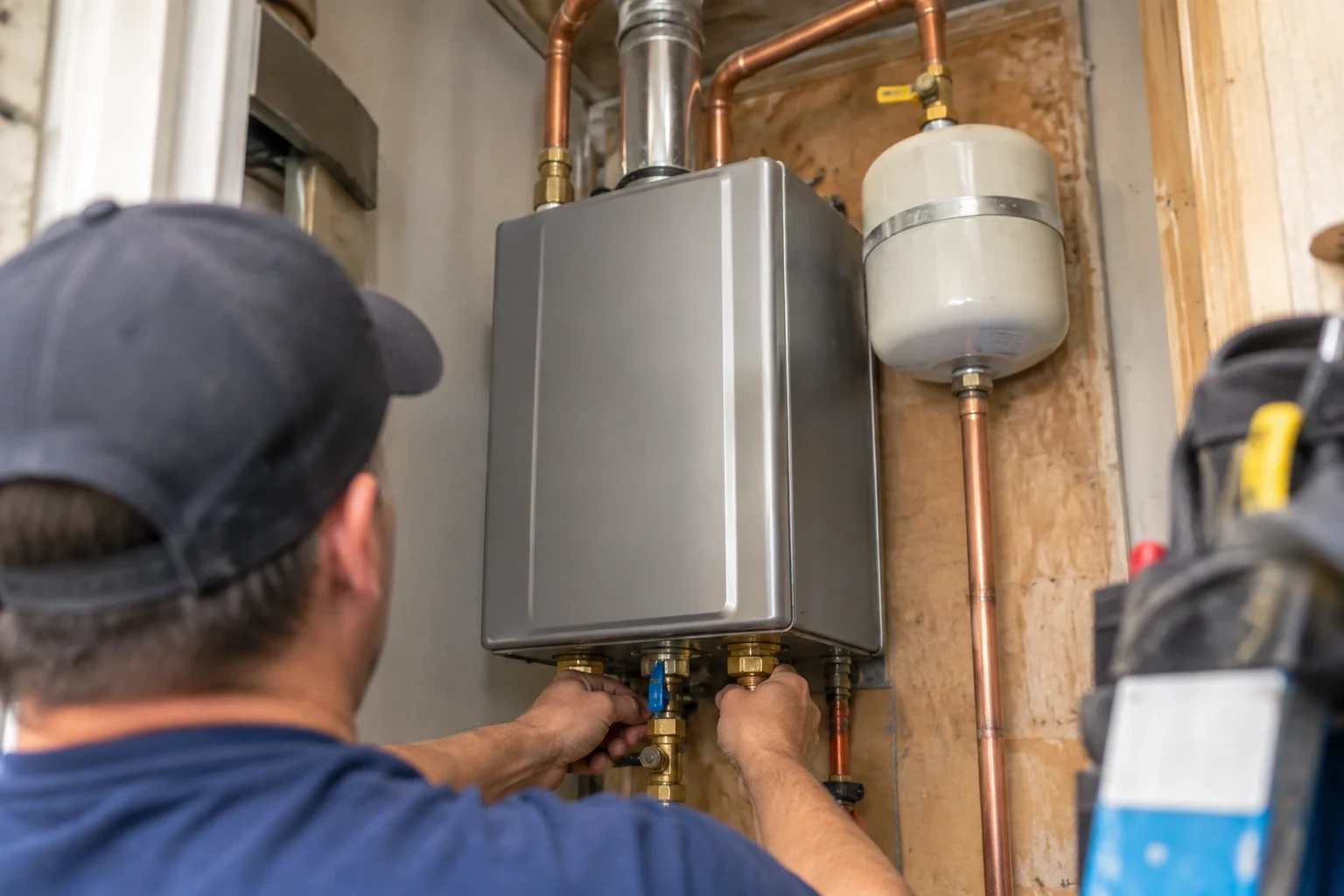
What a Tankless Heater Does Differently
A tank heater keeps 40 or 50 gallons hot around the clock. A tankless unit heats water only as it moves through a heat exchanger, so you stop paying to reheat stored water and you never run the tank dry during back-to-back showers.
The catch is that output depends on flow. Each model lists how many gallons per minute it can deliver while raising the water a certain number of degrees, and that number shrinks as the water coming in gets colder. A unit that handles two showers easily in July may not in January. So we begin with your fixtures and your incoming water temperature, and only then talk about models.
Switching from a tank usually means more than a swap. Most gas tankless units need a larger gas line, a dedicated vent and a condensate drain. We tell you which of those your home needs before you decide.
What the Installation Includes
- Flow and temperature-rise sizing
- We list the fixtures your family tends to run together, like a shower plus the dishwasher, and add up their combined demand. Then we pick a unit whose output still covers that load when the incoming water is at its coldest.
- Gas line upgrade where needed
- Many tankless units draw 150,000 to 199,000 BTU, far more than a tank. An existing half-inch line often cannot carry that, so we size and run new pipe and pressure-test it before the unit is fired.
- Venting and condensate drain
- Condensing units vent through PVC and produce acidic condensate that needs a drain, sometimes with a neutralizer. Non-condensing units need stainless steel venting. We route it to code clearances from windows and doors.
- Isolation valve kit
- Service valves go on both the hot and cold lines. With them in place, descaling solution can be pumped through the heat exchanger without cutting any pipe.
- Removal of the old tank
- We drain and disconnect your old water heater, cap any unused connections and haul it away.
- Permit and startup check
- We pull the permit, then fire the unit, check gas pressure at full burn and confirm the outlet temperature at your fixtures.
Signs a Tankless Upgrade Makes Sense
Your tank is past the decade mark
Once a tank has a decade or more behind it, the anode rod that protects its steel lining is often spent and corrosion speeds up. Rusty hot water or a rumbling sound while the burner fires points to sediment and rust taking over.
Hot water runs out mid-shower
If a second shower or the dishwasher drains the tank, a properly sized tankless unit can keep up without a recovery wait.
You need the floor space
A wall-mounted unit frees the closet or garage corner a tank takes up.
Water around the tank base
A leak at the bottom of a tank usually means the shell has failed and cannot be repaired. If that happens at night, our 24/7 emergency plumbing service can shut it down and talk through replacement.
You are already planning work
A remodel or addition is a good time to run the gas line and vent while walls and ceilings are open.
How the Job Runs
- 1
Walkthrough and estimate
We look at your current heater, gas meter, panel and vent path, then explain the options in plain terms. You get a free written estimate with the gas, vent and unit costs listed separately.
- 2
Permit and scheduling
We file the permit and set an install day. Most homes are without hot water for part of one day.
- 3
Installation
We remove the old tank, mount the unit, run gas, venting and condensate lines, and install the isolation valves. Drop cloths go down in finished areas.
- 4
Startup and walkthrough
We test for gas leaks, verify pressure under load and set the temperature. Then we show you the valves and explain when to flush the unit.
What Moves the Price
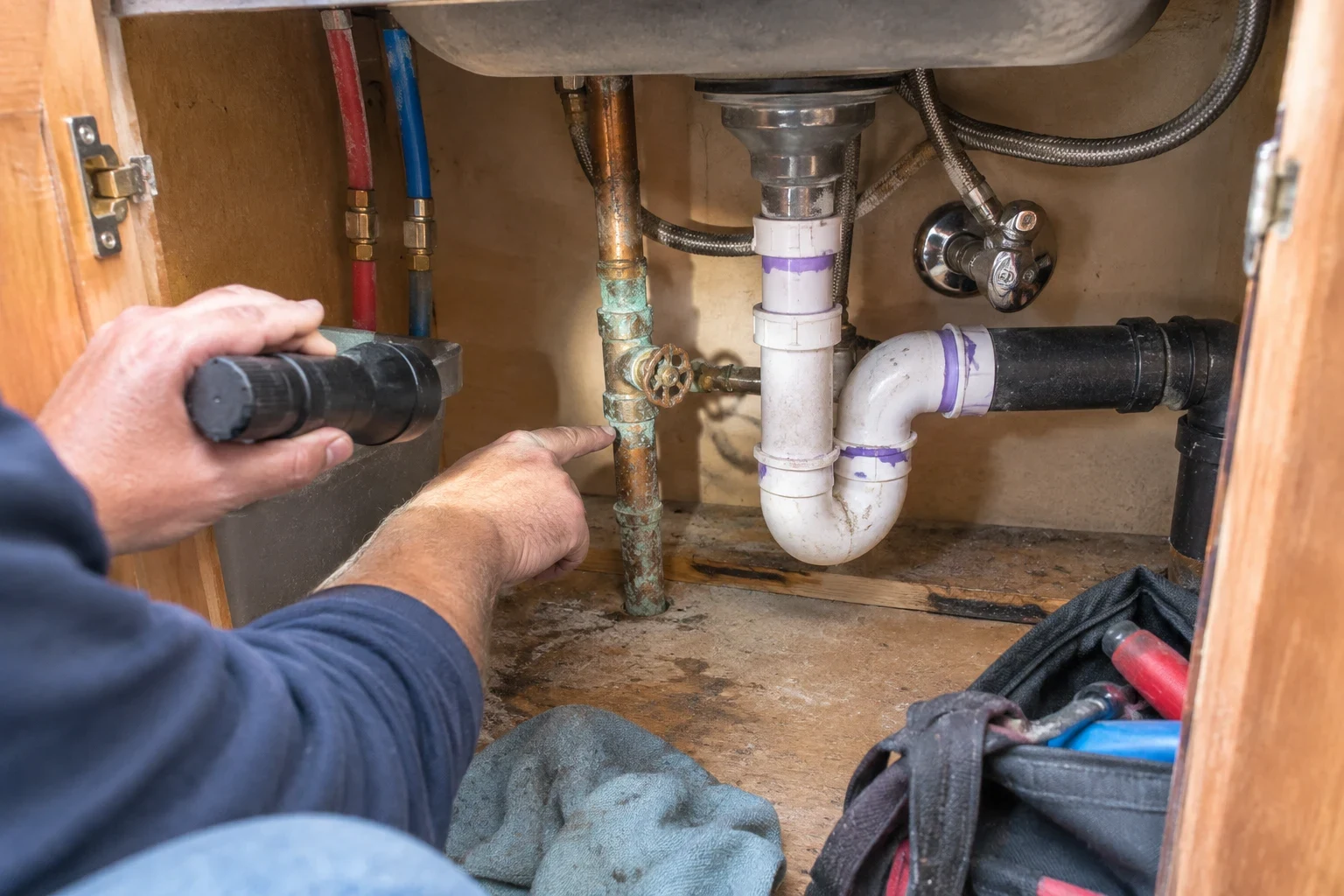
The heater itself is only part of the cost. The bigger swings come from what your home needs to support it. We price each piece separately so you can see where the money goes.
- Unit size and type
- Higher flow ratings cost more, and condensing models cost more up front but vent with cheaper PVC.
- Gas line distance and size
- A long run from the meter or an undersized existing line adds pipe and labor.
- Vent route
- A short path through an exterior wall is simpler than going up through an attic and roof.
- Electric versus gas
- Electric whole-house units often need 120 amps or more and can require a panel upgrade.
- Location changes
- Moving the heater from a closet to a garage wall means new water lines as well as gas.
Tankless Questions We Hear Most
Something not covered here? (615) 551-1523
Will a tankless heater give me endless hot water?
Yes, as long as your household stays inside the unit's flow rating. Open more fixtures than it was sized for and the outlet temperature drops. That is why we size for your coldest winter incoming water instead of trusting a brochure number.
How often does a tankless unit need maintenance?
Expect to flush the heat exchanger roughly once a year, and sooner if your water is hard. Mineral scale builds on the exchanger walls and lowers efficiency, so the isolation valves we put in turn this into a short job. A softener or the equipment on our Whole Home Water Filtration page can slow that buildup.
Can I keep my existing gas line?
Sometimes, but often not. We compare the pipe diameter, the length of the run and the meter's capacity against the unit's BTU input before we recommend anything.
Is there a delay before hot water reaches the tap?
Yes, the cooled water sitting in the pipes still has to clear, just as it does with a tank. A recirculation pump, or a unit with one built in, can cut that wait at fixtures far from the heater.
Can I spread out the cost of a tankless upgrade?
Yes. Financing options are available for this work. For payment at the time of the job, cash and all major credit cards are fine. We walk through the numbers with you when we go over your estimate.
Find Out Which Unit Fits Your Home
We will look at your gas supply, venting and hot water use and explain what each option means before you commit. Serving Gallatin, Hendersonville, White House and the surrounding area.