ServicesWater Filtration
Whole Home Water Filtration in Gallatin
Before you spend anything, we test your water, show you what is in it and explain what each filter stage removes. Then we mount one system on the main line where it comes into your home, so the kitchen, baths, laundry and water heater all draw filtered water.
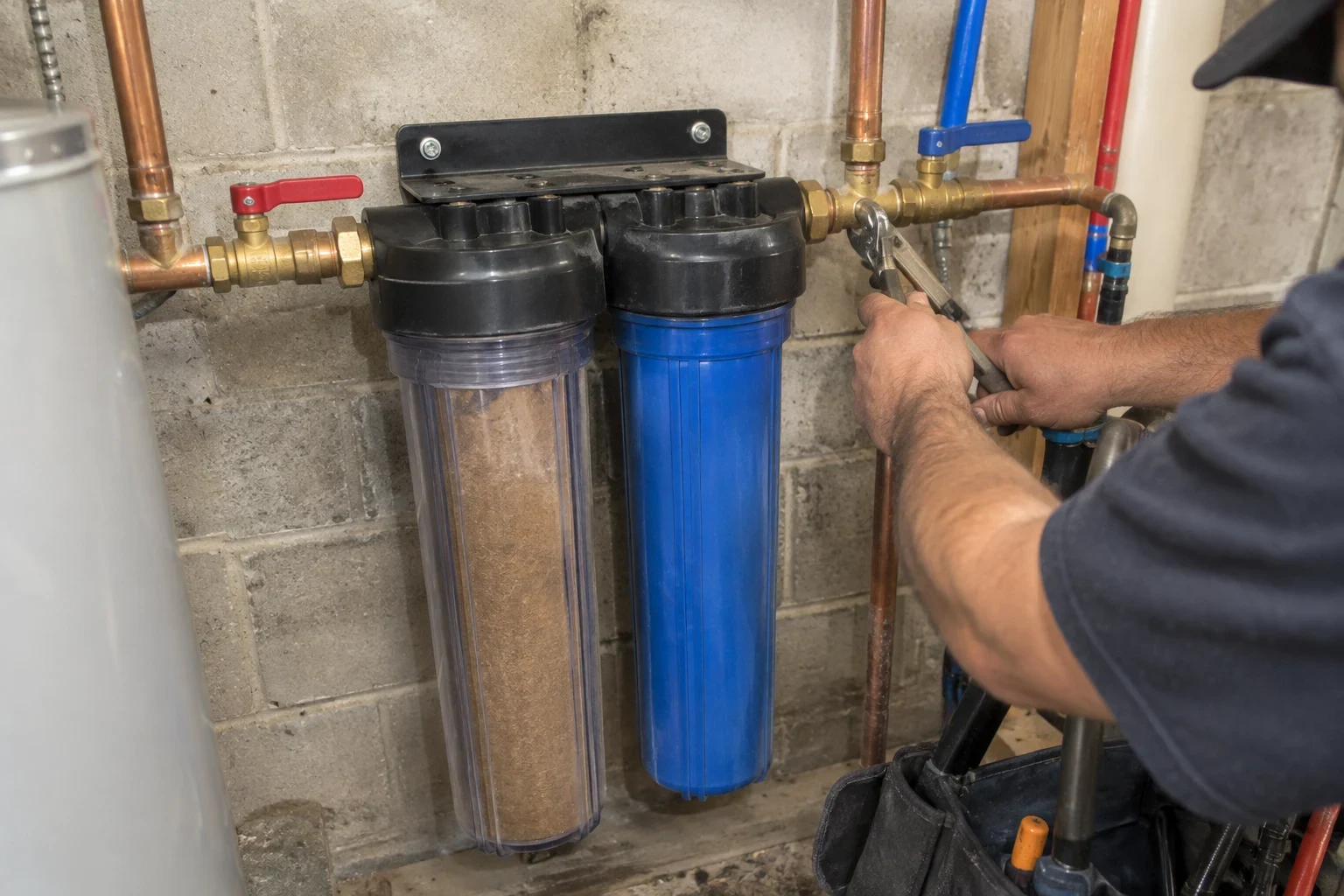
What a whole home system actually does
A whole home system, also called a point-of-entry system, sits on your main water line just after the shutoff valve. Everything downstream passes through it: kitchen, baths, laundry, water heater and outdoor spigots if you choose. An under-sink filter only treats one tap.
Different problems need different media. Sediment cartridges catch sand and rust flakes. Activated carbon removes chlorine taste and odor. A softener uses resin to swap out calcium and magnesium, the minerals that leave white crust on fixtures. Middle Tennessee sits on limestone, so hardness is common here, and it is what scales up water heaters and dishwashers over time.
We will tell you which of these your water needs, and which it does not. Plenty of homes only need one or two stages, not a five-stage setup.
What the work includes
Water test before any recommendation
We check hardness, chlorine, iron and pH on site and walk you through each number. If something calls for a lab test, such as well water with possible bacteria, we tell you that too.
System sizing for your flow
A filter that is too small chokes your water pressure when two showers run at once. We size the housing and media tank to your pipe size and the number of bathrooms, usually measured in gallons per minute.
Bypass loop and shutoff valves
Every install gets valves on both sides and a bypass, so you can change a cartridge or service the softener without shutting water off to the whole house.
Pressure gauges on the filter housing
Gauges before and after the filter show the pressure drop. When the gap widens, the cartridge is loaded and due for a change, so you are not guessing by the calendar.
Drain and electrical connections for softeners
Softeners and backwashing filters need a drain line with a proper air gap and a nearby outlet for the control valve. We plan those during the estimate, not on install day.
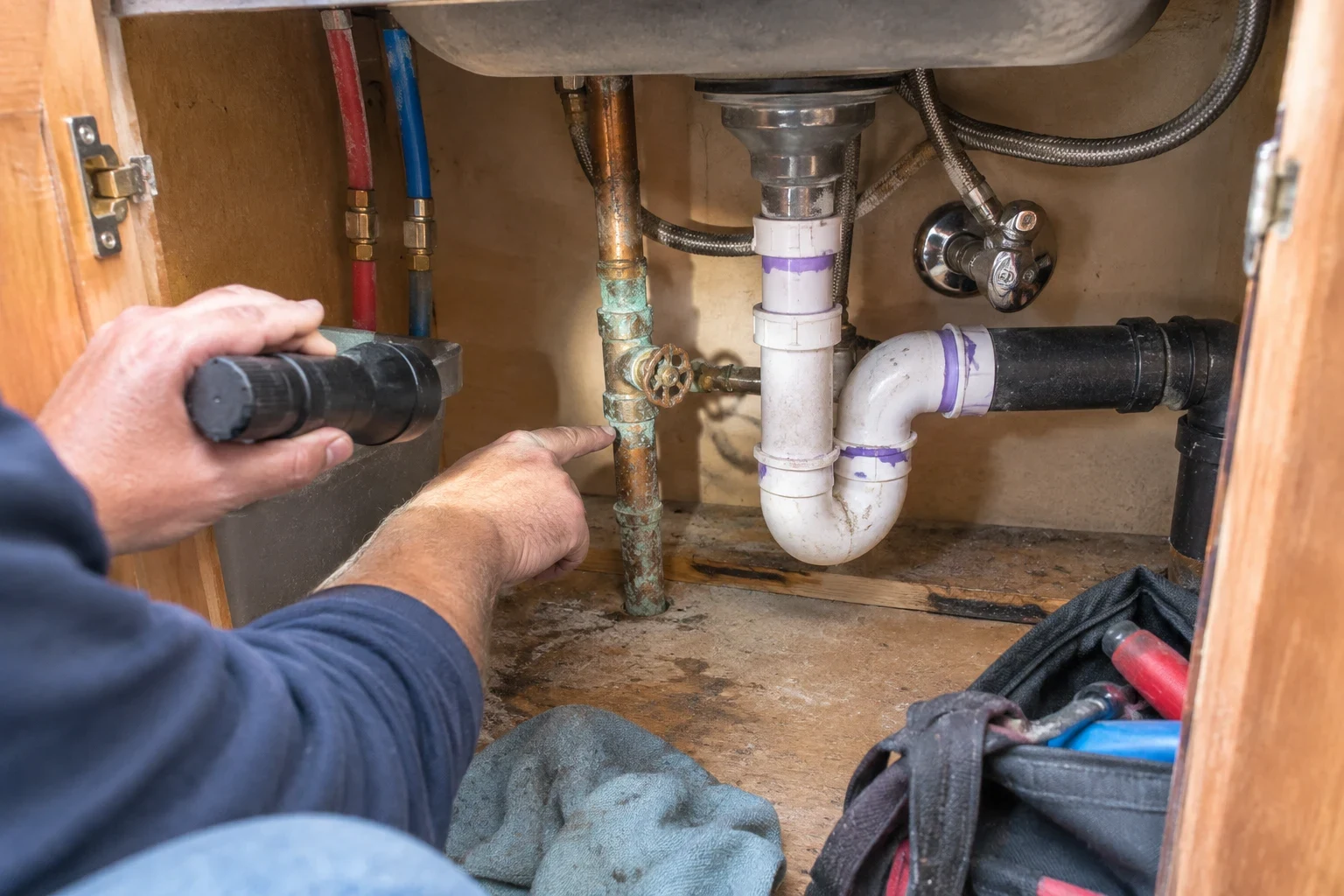
Signs your water needs a filter
- White scale on faucets and glass shower doors
- That chalky crust is calcium carbonate. The same buildup is forming inside your water heater and on dishwasher elements, where you cannot see it.
- Chlorine smell at the tap
- Treated city water carries disinfectant on purpose. A carbon stage removes the smell and taste after it has done its job.
- Orange or brown stains in sinks and toilets
- Rust-colored staining usually points to iron, common with well water. It also stains laundry and needs a specific iron filter, not plain carbon.
- Soap that will not lather
- Hard water binds with soap and leaves film on skin and dishes. A softener fixes this; a sediment filter does not.
- Grit in aerators and showerheads
- Sand or sediment clogging screens means particles are moving through the line. A sediment prefilter protects fixtures and any filter stages after it.
- Short life from water heaters
- If your water heater fills with scale and rumbles early, hard water is often the cause. That matters even more with a tankless unit, which we cover on our Tankless Water Heater Installation page.
How install day runs
- 1
Estimate and water test
We test your water, look at where the main line enters, and explain each option in plain terms with what it removes and what it costs to maintain. You get a written estimate.
- 2
Shut off and cut in
We shut off the main, cut into the line, and install the shutoff valves and bypass. Water is usually off for a few hours, and we tell you when to expect it back.
- 3
Mount and connect the system
Filter housings and tanks get mounted level and secured. Softener drain lines and power are connected, and fittings are checked under full pressure.
- 4
Flush and set up
New carbon media releases fine black dust, so we flush it until the water runs clear. Softener control valves are programmed for your hardness reading and household size.
- 5
Show you the maintenance
Before we leave, we show you how to use the bypass, read the gauges and change a cartridge. We clean up the work area and haul off the packaging.
What moves the price
No two filtration jobs price out the same, because the system depends on your water test and on how the plumbing in your home is laid out. You get the number in writing before we cut into any pipe. If spreading the cost out helps, ask us about financing options. For payment, cash works, and so does any major credit card.
- How many treatment stages
- A basic sediment and carbon pair is the lower end. Adding a softener, an iron filter or a UV lamp raises the cost, and we only suggest stages your test results back up.
- Main line size and flow demand
- A 1-inch main feeding three bathrooms needs bigger housings and media tanks than a 3/4-inch line serving a smaller home, so the equipment itself costs more.
- Where the system has to go
- Mounting on a main line in an open garage or basement is straightforward. A tight crawlspace, or a line that has to be rerouted to make room, adds labor time.
- Cartridges, salt and media over time
- The upfront install is only part of it. We tell you how often each cartridge, bag of salt or media bed gets replaced, so you can compare systems by what they cost to own.
Water filtration questions
- Does filtering the whole house cut my shower pressure?
- When the system is sized right, the drop is small enough that most people never notice it. A noticeable loss almost always comes from undersized housings or a cartridge that stayed in service months past its useful life. We pick equipment that matches your flow rate and add gauges, so you can see a cartridge loading up before it starts to choke the line.
- Is a water softener the same as a filter?
- No. A filter physically traps sediment or adsorbs chemicals like chlorine onto carbon. A softener runs water through resin that trades calcium and magnesium for sodium or potassium. Many homes use both, but your test decides whether you need one, the other or both.
- How often do filters need changing?
- Sediment cartridges commonly need swapping every few months, sooner if your water carries a lot of grit. Carbon tanks and softener resin last for years. Watching the gauges and your usage tells you more than a calendar does.
- Do I still need a drinking water filter at the kitchen sink?
- It depends on what you want from your drinking water. A whole home system takes care of sediment, hardness, taste and odor. If you want reverse osmosis treatment for drinking and cooking, that is normally a small separate unit under the kitchen sink.
- Do you install systems on well water?
- Yes. Private wells on rural properties around Gallatin can carry iron, sediment or bacteria that treated city water does not. We test the well first, recommend a lab test if bacteria is a concern, and build the system around what the well actually delivers.
Find out what is in your water
We will test it, explain the results and recommend only what fixes the problems you have. The estimate costs you nothing.